Foto: Harry Tiits
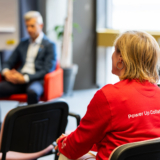
The fifth Adapter Club event focused on the circular economy and, more broadly, on an important question: How does knowledge move from the laboratory into businesses – and from there into real economic impact?
The circular economy is not a single technological solution or simply a green layer added to existing business models. It requires systemic change: new forms of collaboration, rethinking business models, experimentation, and a willingness to openly discuss challenges for which no solutions yet exist.
Tiit Land emphasised that increasing Estonia’s productivity requires greater innovation and closer collaboration between universities and industry. In TalTech – Tallinn University of Technology’s new strategy, collaboration with businesses plays a central role: research outcomes must reach beyond the university. This is particularly important in Ida-Viru County, where the industrial base, the need for a just transition, and the potential of the circular economy converge in a highly practical context.
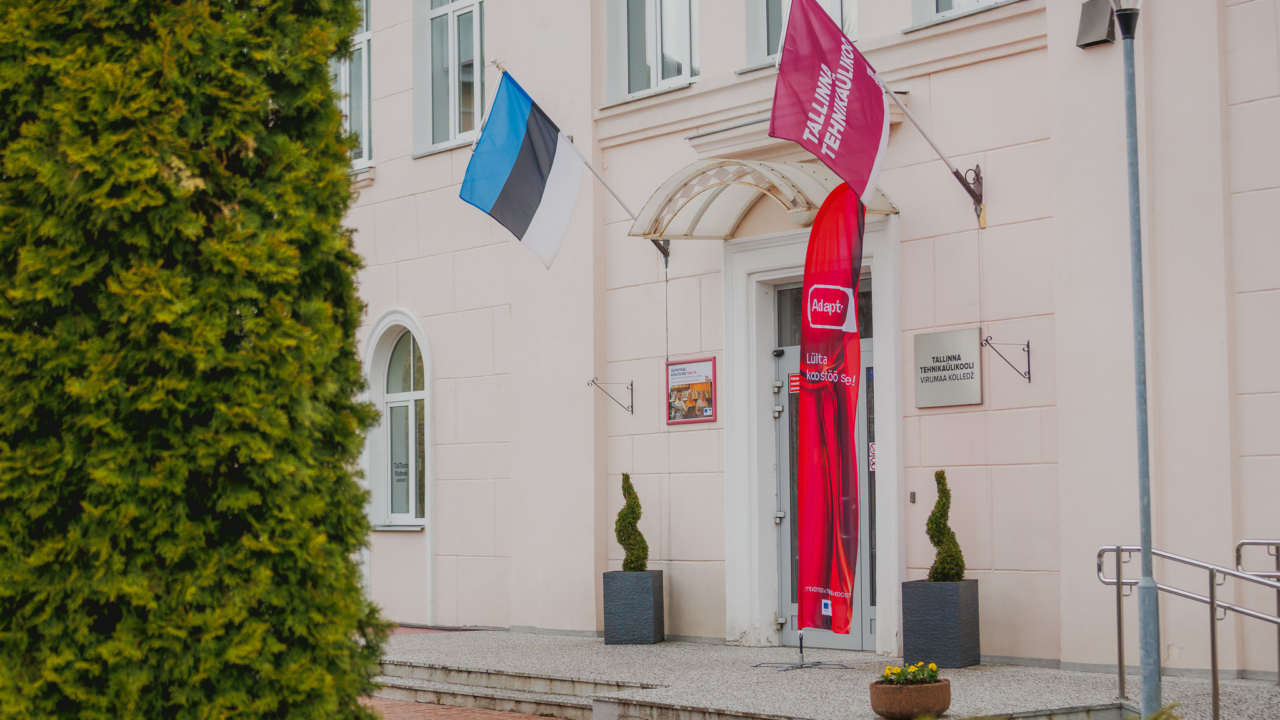
The experiences of TalTech Virumaa College, the TalTech Circular Economy Core Lab, and the Baltic Circular Hotspot demonstrated that the necessary expertise, networks, and scientific capabilities already exist. This type of collaboration between academia and industry – supported organisationally by the TalTech Circular Economy Core Lab – creates the conditions for locally developed ideas to reach broader markets.
The participating companies also confirmed that innovation is rarely fast or linear. Ragn-Sells AS’s development of a process for producing calcium carbonate from oil shale ash illustrates why collaboration with research institutions is essential when developing complex technologies. Before a full-scale production facility can be built, technologies must be tested, refined, validated, and continuously improved.
The example presented by KA OÜ, which focuses on extending the lifecycle of industrial packaging, highlighted another important aspect of the circular economy. Circularity is not only about recycling waste. Often, the greatest value lies in keeping materials and packaging in their original use for as long as possible.
The future of the circular economy depends on the quality of collaboration. Businesses need access to scientific expertise, researchers need real-world challenges, and regions need networks that help local solutions reach international markets.
This is precisely the role of Adapter – to serve as the bridge where challenges, knowledge, and opportunities come together.
The event was organised in cooperation with the TalTech Circular Economy Core Lab.
We look forward to seeing you at the next Adapter Club event on 23 May!