Photo: Tallinn University
16 months of development work between the company and Tallinn University led to the creation of shampoo and conditioner that emphasize the Nordic character and are based on natural and vegan-friendly ingredients.
Products that reflect Nordic nature
Mohlab approached Tallinn University in December 2023. The company wanted to create hair care products that were natural, free of sulfates, parabens and dyes. “At that time, Mohlab as a brand did not yet exist, it was just a start-up company,” recalls Maria Martšenko, Chief Product Innovation Specialist at Tallinn University. In addition, it was important for the brand that their products were also suitable for vegans, and today Mohlab has already received the corresponding certificate for its products.
“When creating products, we always base our development work on the wishes of the client and, in collaboration, we select suitable ingredients that fit the brand’s vision and principles. I believe that as a result of close cooperation, products were created that meet the client’s wishes,” adds Martšenko.
The collaboration resulted in two products – a shampoo and a conditioner. “The focus of the recipe development was on active ingredients that would stimulate hair growth, restore, nourish and strengthen hair. In addition, the formulations selected active ingredients and additives based on natural extracts, which, in addition to their effect, reflect our Nordic nature,” explains Martšenko. The fragrance combinations were designed to be gender-neutral to fit the idea of unisex products.
Development work brought challenges and retests
However, the creation of the product was not without its obstacles, says Marchenko: “Creating a good shampoo that does not contain classic raw materials is a challenge in itself.”
During the development, several novel ingredients were tested that were supposed to replace the classic sulfate-based substances, until finally a suitable base formulation was found. “A total of four or five base formulations were made, from which Mohlab selected the variant they liked the most. Then, various combinations of active ingredients and additives were already tested in this selected variant,” he adds. In the final phase, however, it became clear during the testing of the products that the initial preservative had to be replaced and a new, more effective variant had to be selected. This in turn meant that the time for carrying out the work was extended and repeat tests had to be carried out, but in the end, products were produced that met all the desired criteria.
The project lasted a total of 16 months. During this time, suitable raw materials were mapped, laboratory prototypes were created, tests were carried out and the final formulations were coordinated. On the analysis side, the work included accelerated stability tests and checking the effectiveness of the preservative (Challenge test). “The purpose of accelerated stability tests is to simulate the aging of a product under accelerated conditions to predict its long-term stability in a short period of time, and the Challenge test helps to ensure that the preservative system works effectively throughout the product’s shelf life and that the product is safe to use,” explains Martšenko.
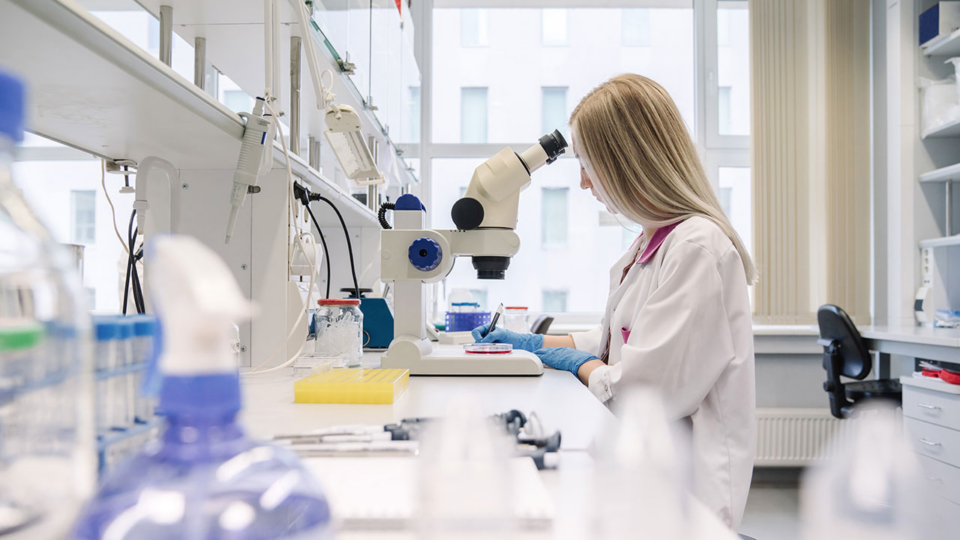
Photo: Brand Estonia
A science-based approach to natural cosmetics
The development of natural cosmetics differs from conventional beauty products primarily in the choice of raw materials. They are based on natural ingredients that come from plants, minerals or animal products. “Significant attention is paid to the ethical and sustainable sourcing of ingredients and, as a rule, synthetic components are avoided, in addition, only certain physical and chemical processes for processing raw materials are allowed. However, there is no official standard or uniform legal definition for natural cosmetics in the European Union,” notes Martšenko. According to Martšenko, companies could turn to Tallinn University precisely because the university offers science-based approaches to developing new products.
“This form of cooperation allows companies to use university knowledge, research resources, and professional expertise that they may not have themselves. It can also be a competitive advantage that helps companies be more innovative and efficient,” he adds.
Product development with the support of EIS
To facilitate the creation of new products, Tallinn University, in cooperation with the Entrepreneurship and Innovation Foundation (EIS), offers companies the opportunity to collaborate and order services within the framework of the innovation unit, applied research and applied research small project support.
The innovation component is a targeted support from the EIS to procure services necessary for product development from an innovation service provider, such as Tallinn University. EIS support can be applied for by a small and medium-sized enterprise entered in the Estonian Commercial Register and a project aimed at developing a novel solution for which the applicant lacks the resources, knowledge, skills or experience. Support can be applied for, for example, to manufacture a prototype, technological development of components, testing and demonstration, to organize product testing and industrial experiments, to conduct a feasibility study, to provide legal advice, research and registration of a patent, utility model or industrial design, but also, for example, for accreditation or certification.
Sources used