Across Estonia, Europe, and beyond, the construction sector is facing several challenges at once: reducing environmental impact, increasing productivity, and making design and manufacturing more flexible. The Wood Architecture Competence Centre (PAKK) at the Estonian Academy of Arts helps companies and public-sector partners address these challenges by bringing together applied research, architectural innovation, and expertise in developing practical solutions for industry.
Now in its fifth year of operation, PAKK’s researchers focus on expanding the potential of wood as a renewable construction material. The team’s mission is to develop knowledge, methodologies, and digital tools that enable more sustainable and efficient design, manufacturing, and construction. Through close collaboration between research and industry, PAKK develops solutions that support both the creation of new products and the improvement of existing processes.
The centre’s research and development activities focus on three strategic areas: the green transition in construction, the digital transformation of the construction industry, and new methods for designing prefabricated timber buildings.
PAKK explores mass customisation in architecture and construction, develops modular building systems, and creates design methods that incorporate manufacturing opportunities and constraints from the earliest stages of the design process.
On 27 August, PAKK will host an Adapter Collaboration Club for Estonian manufacturers and builders of timber houses and small timber structures.
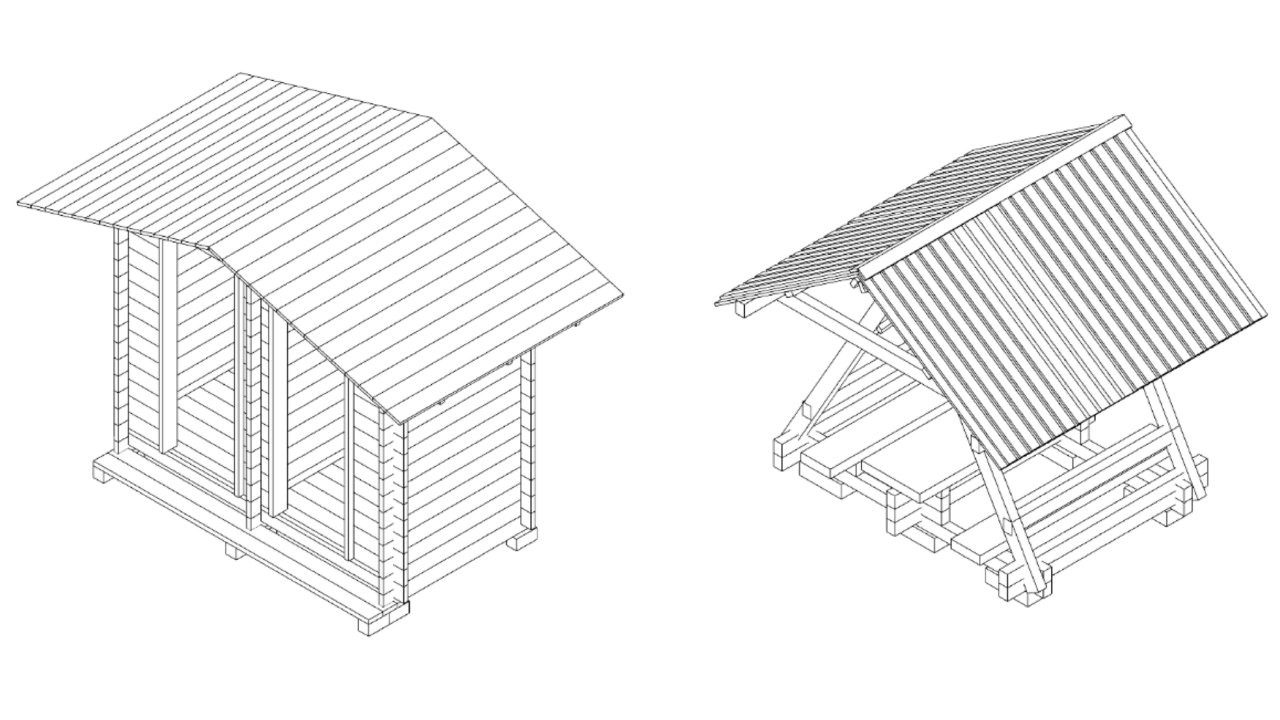
During the event, PAKK researchers will present the Met(s)aRING research and development project, a joint initiative of the Estonian Academy of Arts (EKA) and the State Forest Management Centre (RMK). The project aims to develop a circular and modular construction system for the small-scale visitor infrastructure and buildings widely used in RMK’s recreational areas – one that can be easily adapted, upgraded, and reused over time. Participants will discuss how this challenge can be addressed through the use of standardised timber components and wood industry by-products, while exploring solutions that reduce material consumption, simplify maintenance, and extend the service life of structures.
The Collaboration Club will provide builders and manufacturers with an opportunity to share practical feedback on the applicability of the proposed system. Participants will also discuss how standardised or flexible such a construction system should be, the potential for using reclaimed or lower-grade timber, and how procurement models and collaborative approaches can support the implementation of more sustainable construction solutions. More information about PAKK’s Adapter Collaboration Club is available here.
Projects such as these illustrate the broader mission of PAKK’s researchers: to develop solutions that combine high-quality architecture, efficient manufacturing, and the principles of the circular economy. Through applied research and experimental development, carried out in close partnership with industry, PAKK helps create new products, production systems, and design methods that bring innovation from the research laboratory to the construction site – and ultimately to the people who use the built environment.